How to plan an Interrail trip


Planning an Interrail trip in Europe?
Interrail is one of the best ways to experience Europe by train as a student in 2026.
With the right preparation, your rail adventure can be affordable, flexible and unforgettable. ISIC has gathered tips to help you make the most of your Interrail experience, from choosing the right pass to budgeting and route building.
What is Interrail and which Interrail Pass should I get?
Traditionally, Interrail has been all about travelling around Europe by train. There’s no better way for students to explore multiple destinations at once! There are many different types of Interrail passes nowadays - it's crucial that you pick the pass that suits your travel plans the best. You can compare different Interrail Passes below and choose the one that best suits your travel plans. The Interrail Pass also covers some ferry trips in countries like Greece or Italy, which is a nice bonus to your train travels.
Not sure which pass fits your route?
Is there an ISIC student discount on Interrail Pass?
If you're travelling on a student budget, you'll be happy to know that travellers aged 12–27 can purchase an Interrail Youth Pass at a reduced rate. With Youth Pass, you’ll save 25%. While there isn't a dedicated ISIC student discount on Interrail Passes, an ISIC card can help you save money throughout your trip with student discounts across Europe. From museums and attractions to transport and accommodation, ISIC student discounts can make a noticeable difference on a longer Interrail trip.
When should I go on Interrail and how long should I travel?
The best time for an Interrail trip depends on what kind of experience you’re looking for. Summer (June–August) is the most popular season, but it also means higher prices and more crowded trains and hostels. For many students, late spring (April–May) and early autumn (September–October) are ideal alternatives, the weather is still good, destinations are less busy, and travel costs are often lower.
As for duration, most first-time student travellers choose between 1–3 weeks for their Interrail. A shorter trip of around 7–10 days works well if you want to focus on a specific region or a few nearby countries, while 2–3 weeks gives you enough time to combine multiple routes and travel at a more relaxed pace. The key is not to overpack your schedule, fewer destinations often means a better overall experience.
Planning your route
Interrail remains one of the most popular ways to experience Europe by train for student travellers. Even though the rail network in Europe is mostly excellent and there are always trains running to take you where you want to go, it's worth planning your route with care and to make sure that your transfers are realistic and you can afford to be on the road for the time you've planned. A night train is a fantastic way to save money, but remember to book a bunk bed or a seat on the train beforehand. Make sure that if you want to catch a night train from one city to another, the timetables match your itinerary.
If you want to save some time, you can also fly to your first destination and start your Interrail journey from there! As a student, you’ll find student and youth priced flight tickets via the ISIC app.


Plan your perfect route
Route suggestions for different travels:
Paris - Brussels - Amsterdam - Berlin – Prague (10–14 days)
A classic Interrail route through Europe’s iconic cities, perfect for first-time student travellers.
Vienna - Bratislava - Budapest - Kraków–Warsaw (10–14 days)
A budget-friendly Central and Eastern Europe route with short distances and affordable cities.
Barcelona - Valencia - Madrid - Marseille–Milan (12–16 days)
A southern Europe route combining beaches, culture and big cities, ideal for a sunny and relaxed Interrail.
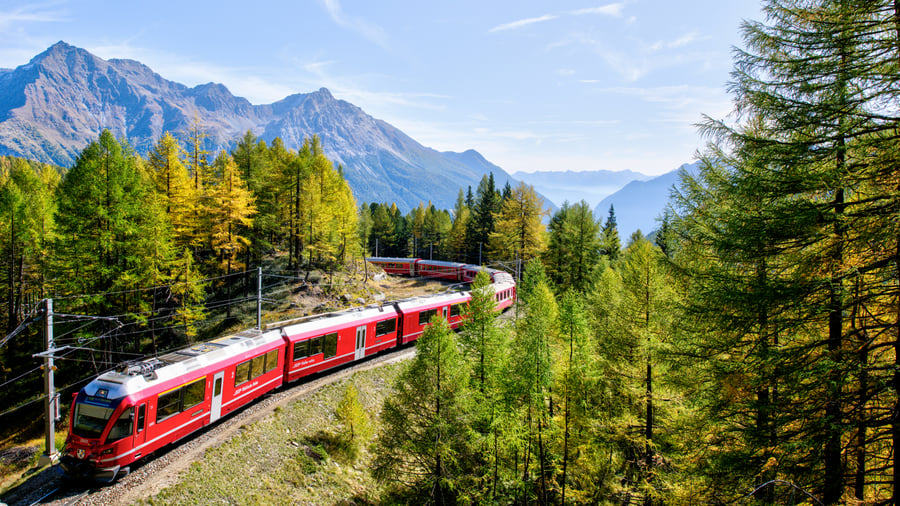

From one landscape to the next
Golden rules for a smooth Interrail trip
1. You can never start planning a trip too early
During your Interrail you're likely visit many different destinations, so planning your transfers, accommodation and schedules is helpful. However, not even the best plans are foolproof, so leave room also for spontaneity and errors. If you want to travel freely, and not book your accommodation ready for each destination (or decide each destination beforehand), it's worthwhile to check a few possible nice places to stay at in every city you are planning to visit, so that you'll have some place to start with when you need a roof over your head for the night.
2. Make reservations
Even though the Interrail ticket gets you on board almost every train in Europe, most railway companies require you to book a seat before you board the train. Seats in sleeping cars need to always be booked ahead. Usually it's enough if you book your seat on the train on the day you travel or the day before. Also, if you are travelling with a friend or two, by making reservations you'll make sure that you'll be seated close to one another. Without a reservation you may end up spending the trip separately or standing in the corridor.
3. Draft a realistic budget
In Europe, a limited budget does not mean limited experiences! Of course, this also depends on the destination; prices in Monaco, Rome and Paris will differ a lot from the prices of Budapest, Prague and Lisbon for instance.
Whichever destinations you choose for your trip, student budget can get you a long way, don't forget that there are thousands of student discounts available with ISIC across Europe. A night at a hostel dorm and cooking your own food at the hostel's common kitchen every now and then will save a lot of money.
Sharing an airbnb with your friends is also a good option to split the costs, and you'll get a bit more privacy. If you want a private room or are looking for high standard accommodation, prepare to raise your daily budget. Experiencing the local cuisine is a big (and arguably the best) part of travelling, but eating out will also eat your budget. If you're not cooking for yourself at the hostel, make sure you'll not fall victim to tourist prices while eating out. Remember that there may be surprising extra costs while travelling; make sure you've got a buffer on your budget to cover ex tempore visits to festivals and spontaneous day trips or having to cover less pleasent costs like surprise extra booking fees.
4. Pack light
The back you travel with will make or break an Interrail. A good backpack is an investment you should consider making before embarking on your travels. A backpack is handy, as it allows you to cover distances by foot more efficiently and is much easier to manage in the crowds of a big city than a suitcase. A proper backpack will be your loyal companion on many trips to come, and will save both your back and your nerves while on the road. A good backpack will fit everything you need, and when you choose one that opens fully from the front or use packing cubes to stay organised on the road, it will be a lot easier searching for the outfit of the day. Also, the lighter your backpack is when you leave home, the more room there is for awesome souvenirs when it's time to return home!
What to pack for Interrail?
Essentials to consider:
Small day bag: for daily exploring without taking your main backpack
Light, versatile clothing: clothes you can layer and mix for different weather and cities
Comfortable walking shoes: you’ll be walking a lot in cities and stations
Reusable water bottle: saves money and is practical for long travel days
Power bank: essential for trains, maps, and long days out
Travel documents + digital copies – ID/passport, Interrail Pass, bookings (keep both physical and phone copies just in case)
Padlock: for hostel lockers and securing your belongings
Packing cubes: helps keep your backpack organised and saves space
Basic toiletries and cosmetics (travel size): keep it minimal and refill when possible
Light jacket or rain layer: weather can change quickly across Europe
Earplugs + sleep mask: useful for hostels and night trains
Wallet/card + some cash: cards work almost everywhere, but cash is still useful in some places
Your digital ISIC: for all the student discounts across Europe


Pack smart
Common mistakes to avoid on Interrail
One of the biggest mistakes first-time Interrail travellers make is trying to fit too many cities into too little time. Constant travel can quickly become exhausting, and you often end up spending more time on trains than actually exploring destinations. Slowing down and spending more time in each place usually leads to a much better trip.
Another common mistake is underestimating reservations and travel times. Even with an Interrail Pass, some trains require seat reservations, and popular routes can sell out in advance. It’s also easy to forget how long transfers between cities actually take, especially when changing countries.
Finally, many travellers don’t leave enough flexibility in their budget or schedule. Unexpected costs, spontaneous plans, or changes in route are all part of the experience, so having some buffer time and money makes the trip much smoother and less stressful.
Find the best Interrail ticket for you